
Products · Concrete, Stone And Precast
CONCRETE, STONE & PRECAST
Concrete Block and Stone Panel Grab
Mechanical Gripping for Concrete and Stone Blocks
Automatic mechanical jaw gripping under hoisting force, with configurable openings, replaceable contact pads and project-specific engineering.
- Up to 3 t
- Product-family upper capacity
- 150–1100 mm
- Family external gripping range
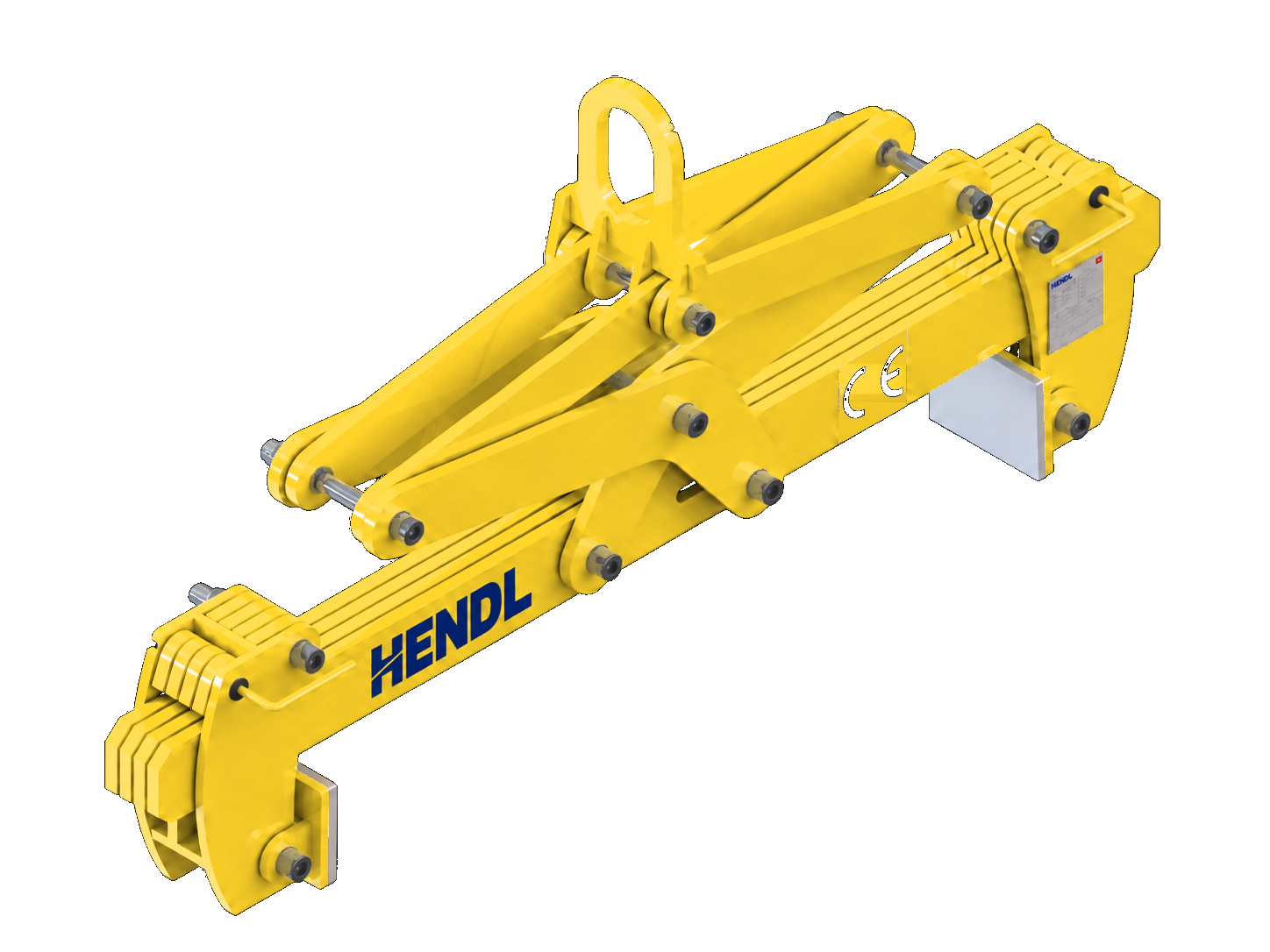
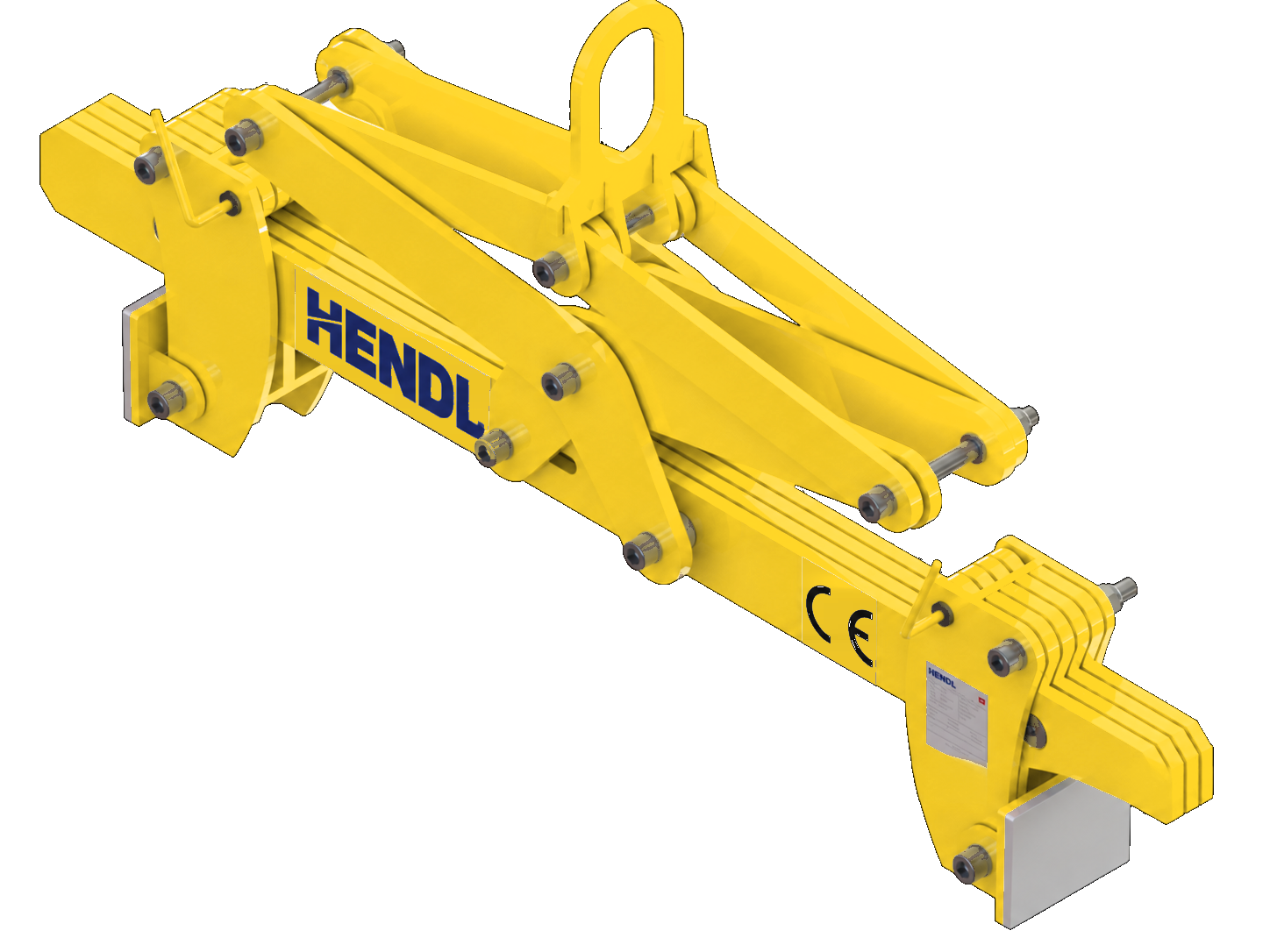
Product introduction
The HENDL Concrete Block and Stone Panel Grab is a family of mechanical below-the-hook lifting clamps for concrete and stone blocks. The jaws close under hoisting force, while sliding, pinned or screw-adjusted jaw arrangements can be engineered to suit the load. Application-specific versions may grip externally or internally and use different contact pads. Thin stone panels and other unusual loads require a separate engineering assessment rather than being treated as automatically compatible with a block grab.
Standard Capacity And Dimensions
Up to 3 tonnes is the product-family upper capacity, not the working load rating of the pictured unit or a guaranteed load for every jaw opening or surface. The stated 150–1100 mm range applies to external gripping within the family; capacities or widths beyond these bounds need dedicated engineering. All other dimensions, jaw designs and pad materials are tailored to the project. The baseline application is one intact block with a clean, dry, suitable gripping surface. Wet, oily, dirty or insufficiently grippable surfaces are not assumed safe. Thin stone panels, polished marble and other specialised loads need separate validation. No universal load suitability, completed proof test or certification is claimed.
Working Principle
The lifting clamp is adjusted to the engineered jaw opening and correctly placed onto one sound, suitably surfaced block. As the crane hoists, the linkage draws the jaws together to develop a friction-based grip; the mechanical retaining arrangement helps prevent unintended opening while suspended. When the block is fully and securely supported and the hoisting force has been removed, the automatic release cycle can operate. The base device requires neither electrical nor hydraulic power. Internal gripping is permissible only with jaws specifically designed and assessed for that lifting direction.
Selection
Select the block lifting clamp using the individual load mass, dimensions, gripping wall thickness, structural integrity, centre of gravity, usable contact area, surface texture and whether the surface is clean and dry. The friction coefficient, required clamping force, contact pressure and slip risk must be assessed for each application. Flat-sided blocks and cylindrical loads use different interchangeable jaw arrangements. A crane-hook attachment or a suitable forklift boom lifting interface is selected around the actual lift height, crane geometry and site constraints.
Gripping safety and engineered configurations
Depending on the engineered configuration, sliding, pinned or screw-adjusted jaws may be provided with mechanical adjustment retention, a load-holding release sequence and replaceable, inspectable rubber, polyurethane or other suitable contact pads. Application assessment covers friction, contact pressure, jaw engagement depth, load integrity and centre-of-gravity position. Engineered alternatives include custom capacities and openings, reversible or interchangeable jaws for validated internal/external gripping, flat or curved contact geometries, low-headroom layouts, crane or forklift-boom interfaces, mechanical position indication and separately designed sensing. Pipes, tyres, drums, polished stone and thin panels require distinct load and gripping assessments; compatibility with every such item and slip-free lifting are not claimed.
Technical Figures For A Quote
For a technical quotation, provide a drawing of the concrete or stone block, unit mass, dimensions, intended gripping direction, available jaw contact surfaces and centre-of-gravity location. Specify surface texture, moisture and contamination risks, material integrity, duty frequency and site constraints. Include crane-hook details or a compatible forklift-boom lifting interface, available headroom, and any requests for internal gripping, interchangeable jaws or a non-standard capacity/opening. The clamp can then be engineered around these requirements.
Request a concrete block lifting clamp quotation
Questions
How does the Concrete Block and Stone Panel Grab operate?
Hoisting force closes the mechanical jaws around a single suitable concrete or stone block. The retaining arrangement limits unintended release while the load is suspended. Once the block is fully supported and hoisting tension is removed, the automatic release sequence can take place. The base design needs no external electrical or hydraulic power.
Does every model lift 3 tonnes across a 150–1100 mm opening?
No. Three tonnes is the upper product-family capacity, and 150–1100 mm is the stated external gripping range. The actual working load and gripping geometry depend on the block dimensions, gripping surface, centre of gravity, jaw configuration and lifting interface. Other loads and openings can be considered through separate engineering.
Can this grab lift internally, or handle wet or polished stone?
Internal gripping is possible only in configurations with jaws designed and verified for the particular load geometry. The baseline application assumes one intact block with a clean, dry surface and adequate friction. Wet, oily, dirty or polished surfaces require specific calculations and validation; they are not covered by a general suitability claim.
Related Equipment
Quote