
SPECIAL LOAD LIFTING
Pipe Lifting Clamp
A paired lifting solution for horizontal pipe handling, engineered to suit different pipe dimensions and load requirements.
The HENDL Pipe Lifting Clamp is a crane-operated mechanical lifting attachment designed to grip suitable edge areas at both open ends of a pipe for horizontal lifting at two points.
- Engineered to order
- Rated lifting capacity
- Two-point horizontal lifting
- load-actuated mechanical gripping principle
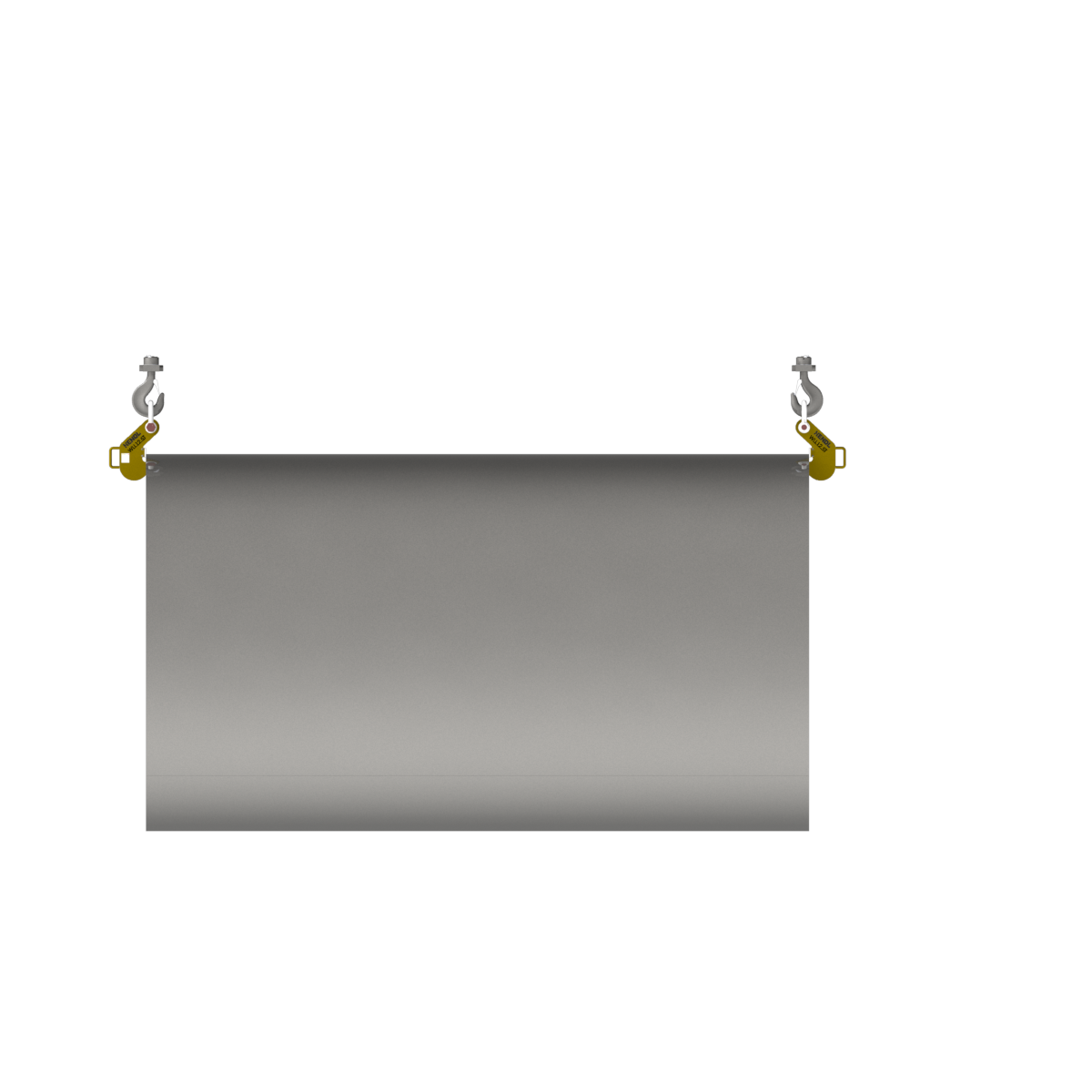
Frame loading
Product introduction
Load-gripping equipment for industrial pipe lifting and handling.
Pipe Clamp
The arrangement uses two clamps positioned at suitable lip or edge sections of the pipe’s open ends. Clamp geometry and the lifting arrangement are specified for each application after assessing pipe diameter, wall thickness, length, material, surface condition and centre of gravity. Engineered solutions can be developed for steel, concrete and other structurally suitable pipe types, subject to verification.
Standard Capacity And Dimensions
The working load limit (WLL) is specified for the complete pair of clamps, not automatically for each clamp individually. WLL, permitted pipe diameter, wall thickness and length, and equipment self-weight are verified for each project. No generic numerical capacity or dimensional range is published for this product family.
One set comprising two pipe lifting clamps, suitable connecting shackles and slings selected for the engineered lifting arrangement. Sling type, length, angles and connections are defined in the project documentation. Crane and lifting beam are not included as standard.
Use only with the approved pipe type and lifting arrangement. Verify pipe-edge strength, wall thickness, contact conditions, load centre, load distribution, connecting hardware and sling angles. Do not attempt to open a clamp under load, lift loads over people, or use the horizontal configuration for vertical handling.
EN 13155 and EN ISO 12100 are design and risk-assessment references. The manufacturer states that CE conformity documents are available; their applicability to the exact model, configuration and relevant legislation is verified within the quotation and delivery dossier. Custom variants are assessed separately.
Working Principle
The gripping force is generated by the designed mechanical linkage under the action of the lifted load. The clamps are positioned on suitable end-edge areas and the pipe is lifted horizontally after checking load sharing between the two points and sling angles. Release takes place only after the pipe is safely supported and the lifting arrangement unloaded.
Selection
Steel pipe production, pipe storage and dispatch yards, concrete pipe manufacturing, loading and unloading of pipeline components, and special industrial pipe-handling operations.
Two-point horizontal lifting; load-actuated mechanical gripping principle; engineered options for different diameters and wall thicknesses; optional protective contact pads where appropriate; adaptable to crane-based material handling systems.
Horizontal handling is the standard configuration. Vertical lifting requires a separate design and verification process. Protective contact pads are optional. The mechanical arrangement can be tailored to pipe material and geometry, crane interface, connection hardware and operating conditions.
Technical Figures For A Quote
For an enquiry, provide pipe material, outside diameter, wall thickness, length, mass, open-end details, surface condition, operating environment, crane interface and lifting arrangement.
Request an engineered quotation for your pipe dimensions and lifting conditions.
Questions
Which types of pipe can be handled?
The equipment can be engineered for steel and concrete pipes. Other materials require verification of edge strength, geometry and contact conditions.
Is the lifting orientation horizontal?
Yes. Horizontal lifting is the standard application; vertical lifting requires separately engineered and verified equipment.
Where do the clamps grip the pipe?
At suitable edge or lip areas of the two open pipe ends, subject to verification of wall thickness and edge strength.
How many clamps are used?
The standard arrangement uses one pair of clamps, providing two lifting points.
Is WLL rated per clamp or per pair?
WLL is specified for the complete pair and its defined lifting arrangement, not automatically per individual clamp.
How is the gripping force generated?
The designed mechanical linkage develops gripping force under the action of the lifting load; the conditions must be verified for the actual model.
Are protective pads available?
Protective contact pads are an option where compatible with the application.
What diameters and wall thicknesses can be handled?
There is no published universal range. The design is based on the pipe outside diameter, wall thickness, length and mass.
What is the lifting capacity?
WLL is determined per project and specified for the complete pair in the approved technical documents.
Are slings and shackles included?
Yes. The engineered supply includes two clamps, suitable shackles and selected slings.
Which standards are referenced?
EN 13155 and EN ISO 12100 are design and risk-assessment references; applicability is checked for each model.
Is CE documentation available?
The manufacturer reports existing CE conformity documentation. The applicable model and variant scope is confirmed within the quotation and delivery dossier.
Related Equipment
Quote